
• This is default featured slide 1 title

    Go to Blogger edit html and find these sentences.Now replace these sentences with your own descriptions.This theme is Bloggerized by NewBloggerThemes.com.

  • This is default featured slide 2 title

    Go to Blogger edit html and find these sentences.Now replace these sentences with your own descriptions.This theme is Bloggerized by NewBloggerThemes.com.

  • This is default featured slide 3 title

    Go to Blogger edit html and find these sentences.Now replace these sentences with your own descriptions.This theme is Bloggerized by NewBloggerThemes.com.

  • This is default featured slide 4 title

    Go to Blogger edit html and find these sentences.Now replace these sentences with your own descriptions.This theme is Bloggerized by NewBloggerThemes.com.

  • This is default featured slide 5 title

    Go to Blogger edit html and find these sentences.Now replace these sentences with your own descriptions.This theme is Bloggerized by NewBloggerThemes.com.

Coronavirus in 2021: there will be no quick rollback to normal life, everything is complicated with vaccines

At the end of last winter, it was hard to believe in horror stories about hundreds of thousands of cases and deaths from coronavirus, but the reality turned out to be even worse. But now the world has a vaccine, and more than one. It would seem that soon COVID-19 will become just history - albeit the one that changed the world. However, experts are sure that it is too early to rejoice. At least half of the new year (or even a little more) will be quite stressful and especially important for the fight against the pandemic.

Vaccine shortage expected

Senior Researcher Sumiya Swaminathan of the World Health Organization (WHO) believes the next six months will be especially important in containing the pandemic. Positive changes are definitely outlined, the scientist believes: "We are approaching the beginning of the end, we see light at the end of the tunnel." But this tunnel is long.

The fact is that existing vaccines approved by various regulators do not immediately protect against coronavirus. In addition, a huge number of doses are required to be manufactured, and some manufacturers have already stated that difficulties are expected with delivery. Thus, Pfizer informed the US presidential administration that it would not be possible to provide the country with additional supplies until the end of June or the beginning of July: other states had already hurried up and staked out orders. Plus, you need to take into account the working hours of doctors who will have to give injections to patients. This, Swaminathan sums up, will make the coming months very tense.

Coronavirus in 2021: there will be no quick rollback to normal life, everything is complicated with vaccines
Image: Reuters

Of course, the availability of vaccines, also from several corporations, is better than their absence. But vaccinations are not easy. The current vaccines are two doses per patient. For example, the Pfizer option requires the vaccine to be given 21 days apart. A two-stage application extends the positive effect of vaccination over time.

Countries will vaccinate primarily citizens in a high-risk group: these are, of course, doctors, as well as specialists who are forced to contact a large number of people. Everyone else will have to wait for the hype to drop, and this can take months. Only after most of the population has been vaccinated will it be time for herd immunity to form. It is not known exactly what percentage of the population should be vaccinated to stop the spread of coronavirus. But it is believed that about 60-80% will be enough.

If we extrapolate the situation to the whole world, then it turns out that it is required to vaccinate 5-6 billion people - in the coming months, of course, this will not work. And it's not a fact that such an indicator will be achieved later. There is also positive news: a noticeable decrease in the number of cases can be expected in the spring - this will happen precisely due to the start of vaccination of people from the high-risk group.

Infringement of rights against the fight against the virus

Will the vaccine be mandatory? So far, this is out of the question. But it may happen that without a vaccine delivered, a person will be cut off, for example, from travel.

In Brazil, the court has already ruled that restrictions may be imposed on citizens who will not vaccinate themselves against COVID-19. At the same time, the court noted that the laws of the country prohibit compulsory vaccination. However, you can use certain measures against people who refuse vaccination.

Among them is a ban on visiting certain places or studying at a public school. By the way, the same Brazilian court ruled that parents or guardians must vaccinate their children against COVID-19.

Probably, other countries will also support similar demands to one degree or another. On the one hand, this is actually forcing a person to vaccinate, which can be regarded as a violation of his rights, on the other hand, something needs to be done with the coronavirus, and it is hardly possible to stop the pandemic without mass vaccination. It was thanks to total vaccination that smallpox was defeated - the last case of infection was recorded in 1977.
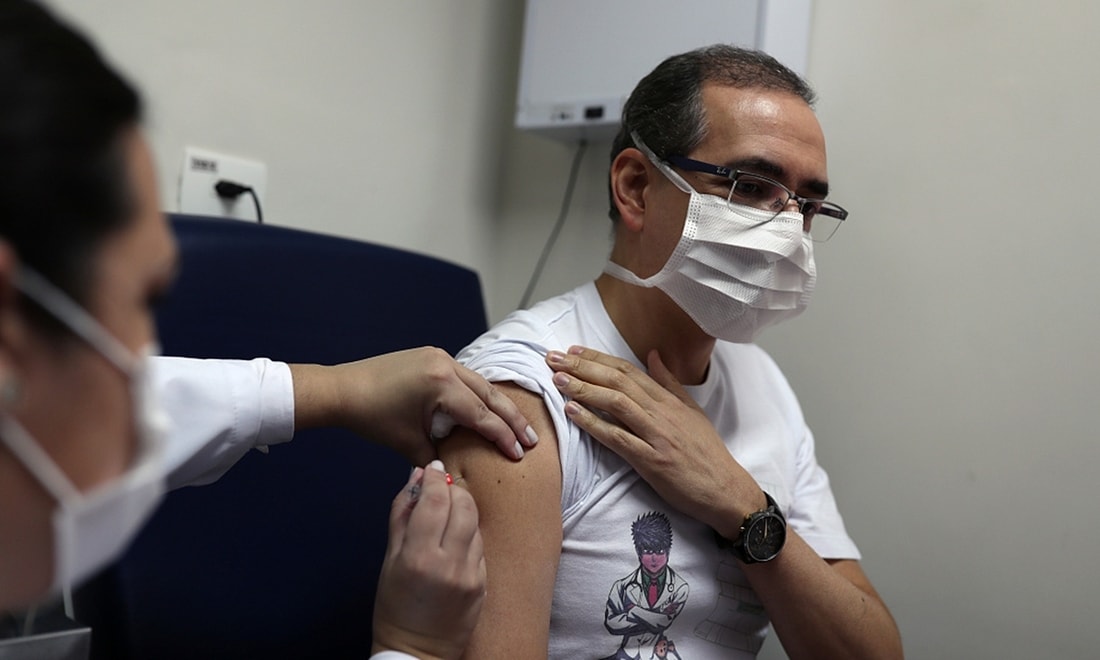
There will surely be high-profile court cases where COVID dissidents will go against politicians, and this is not to mention the new wave of the burning of 5G towers or anything else that people in foil hats will call the new culprit of the pandemic. But globally, even before COVID-19, when visiting some countries (mainly African and Latin American), travelers were strongly advised to get vaccinated against diseases specific to specific regions. Here, the plus or minus picture is the same, so we most likely will not see something fundamentally new.

It will take "many months and years"

The situation in the United States "will come to some semblance of normality" this fall, said immunologist Anthony Fauci, one of the country's most respected experts. At the moment, there are almost 21 million detected cases of coronavirus in the United States, of which approximately 360 thousand have been fatal. Trump's spring forecasts, according to which the country could lose 100 thousand people from COVID-19, then seemed like something unrealistic. Now it is clearly seen that the seemingly pessimistic forecasts would be a positive outcome.

So far in the United States, the distribution of the vaccine is not easy. By the end of 2020, authorities planned to vaccinate 20 million Americans. In fact, about 2.8 million people received the vaccine. The proliferation of regulatory-approved vaccines has been slow, and this is causing much outrage among Americans. Doctors at Stanford Medical Center even staged a protest: the first batches of vaccine were given to the wrong doctors who work directly with COVID-19 patients.

Also criticized the hit on the federal government Dean of the Faculty of Public Health at Brown University Ashish Jha: "They think their job is over with we bring the vaccine to the United States, and there is no clearly defined plan." According to the expert, a long chain of mistakes, which began in the spring, led to the current state of affairs. Ashish Jha believes that if the delivery of doses continues at the current pace, it will take "many months and years" to vaccinate the population. It faces hundreds of thousands of new deaths from COVID-19 in the United States alone.

Vaccines are demanding on temperature conditions, which also adds to the difficulties in their transportation and storage. For example, the Moderna vaccine should be stored at -20 degrees Celsius, and the vaccine developed by Pfizer and BioNTech should generally be stored at -70 to -80 Celsius. The AstraZeneca variant promises to be much more convenient. According to the corporation, a temperature of about 2-8 degrees Celsius is needed, that is, an ordinary refrigerator will do. However, this vaccine is not yet ready for use. Also, problems with the supply of consumables are not excluded: a lot of disposable syringes, cotton wool and gloves will be needed in excess of the current needs of medical institutions.
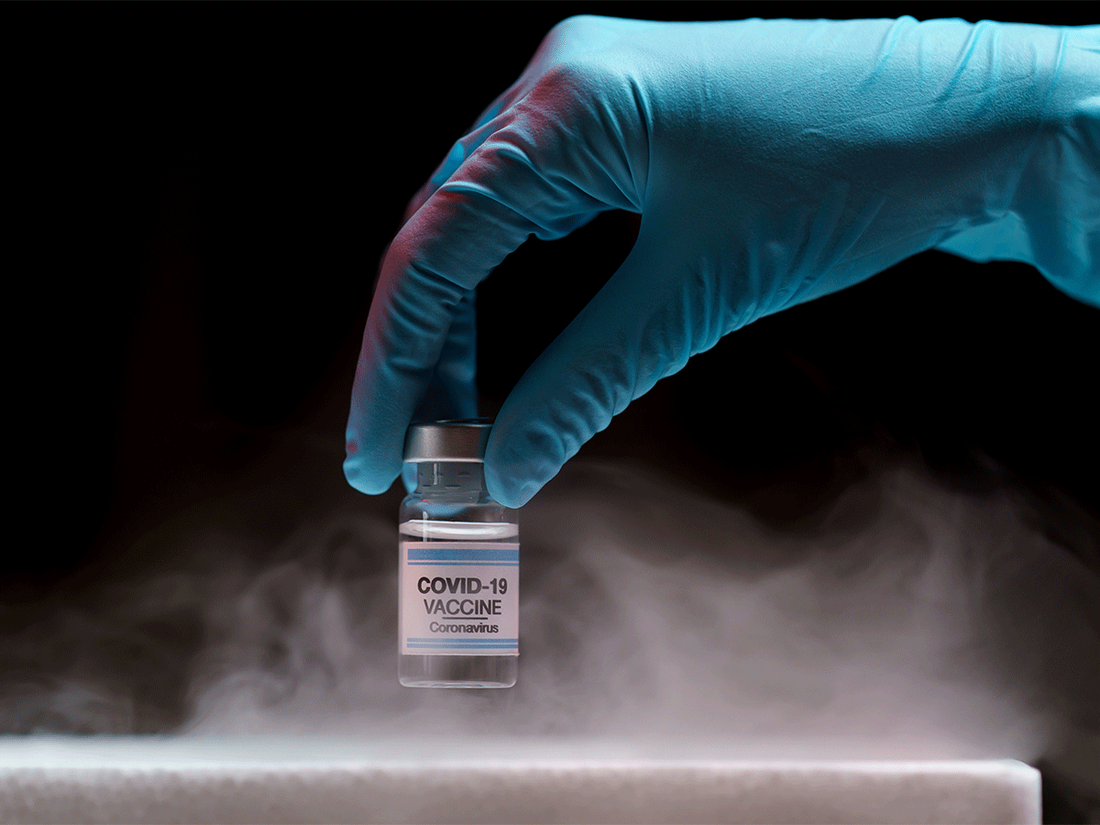
Coronavirus in 2021: there will be no quick rollback to normal life, everything is complicated with vaccines
Image: bioworld.com

Finally, yet it remains a vague situation with new strains that periodically arise. Sumiya Swaminathan from WHO assures that at the moment there is no reason to doubt the effectiveness of vaccines against both the "original" coronavirus, that of the new varieties: they say, the reaction of the immune system to vaccinations is such that the body must be protected from different strains. And if a separate vaccine is needed, it will be easy to make.

In short, all this leads to the fact that with the advent of effective vaccines, the coronavirus will not disappear at a click and the world will not return to the “dock” format. Much of the new reality will remain for at least the coming months, and it is likely that it will remain until the end of the year. Wearing masks, using antiseptics, maintaining social distance - if you are just used to this, then you will not have to change your habits again, everything will remain as it is. Health professionals believe that basic measures against the spread of COVID-19 will be relevant throughout the year.

Share:

Turkey announced the creation of a device that diagnoses COVID-19 in 10 seconds

Turkey announced the creation of a device that diagnoses COVID-19 in 10 seconds


Scientists at the Bilkent University Research Center (Turkey) claim to have developed an ultra-fast and highly accurate coronavirus test that can seriously compete with the PCR test.

According to the researchers, their Diagnovir device, developed on the basis of nanotechnology, shows the result within 10 seconds with an accuracy of 99%, a reference to Euronews.

To do this, first, a swab is taken from the patient's mouth, which is then mixed with a solution and added to a chip to detect pathogens.

"It detects the presence of pathogens with high accuracy by receiving a fluorescent signal," said one of the researchers at the Turkish National Center for Nanotechnology.

He explained that the device, on average, detects a positive result within 5-10 seconds, but if it is negative, the process can take up to 20 seconds.

Researchers are now awaiting approval from the Turkish authorities and expect to begin mass production of devices in the coming months.

They hope that eventually, their invention will replace PCR tests.


Share:

Ebola scientist claims deadly new fever in Congo

Ebola scientist claims deadly new fever in Congo

Congolese microbiologist Jean-Jacques Muembe-Tamphum, who discovered the Ebola virus in the past, believes a deadly new disease has emerged in the Congo. He stated this in an interview with CNN. The disease was diagnosed in a patient in the west of the country. Tests showed that she was free of the Ebola virus and other known diseases in the presence of symptoms of hemorrhagic fever. The new virus was named “disease X”. The carrier is isolated, she is allowed to communicate with loved ones only through a closed window. 

The WHO took the microbiologist's statement very seriously. The Russian Rospotrebnadzor also showed attention to the situation. Now they are studying all the sources and publications on the situation in the Congo. As the deputy director of the Central Research Institute of Epidemiology of Rospotrebnadzor, Alexander Gorelov, noted, the symptoms described by Muembe-Tamfum do not necessarily indicate an infectious disease. He recommends refraining from panic until the pathogen is found.

- I think that it is premature to fear a new pandemic because the symptoms of a hemorrhagic fever can also be observed in classic hemorrhagic and allergic vasculitis. This may be a somatic non-communicable disease, or congenital vascular fragility, which is enhanced by the action of infectious agents, or manifestation of autoimmune diseases, - said Gorelov news agency "RIA Novosti".

Share:

Anti-aircraft and blinding. Projects of naval combat lasers for the US Navy

Anti-aircraft and blinding. Projects of naval combat lasers for the US Navy

Anti-aircraft and blinding. Projects of naval combat lasers for the US Navy
LaWS laser complex aboard USS Ponce (AFSB (I) -15), 2014 Photo by US Navy

In recent years, the US navy has shown great interest in promising laser weapons suitable for installation on warships. Several samples of this kind have already been developed and tested, and new products should appear in the future. With the help of combat lasers, the Navy is going to fight surface targets, as well as carry out anti-aircraft and anti-missile defense.

Notable successes


Since 2010, the Kratos Defense & Security Solutions company, commissioned by the Navy, has been developing a Laser Weapon System (LaWS) laser combat complex. Its main element was an infrared solid-state laser with a power of 30 kW, capable of striking optoelectronic systems and destroying structural elements of surface or air objects. It was noted that the complex, for all its complexity, is extremely cheap to operate. One laser "shot" costs less than 60 cents.

In 2012, testing of the AN / SEQ-3 LaWS product began in the conditions of a ground test site, which confirmed the calculated characteristics. In 2014, the complex was installed on the USS Ponce (AFSB (I) -15) landing ship for tests at sea. In the future, the prototype has repeatedly demonstrated its capabilities to combat various targets.

Anti-aircraft and blinding. Projects of naval combat lasers for the US Navy
USS Portland uses LWSD laser, May 2020 Photo by US Navy


Trials on the USS Ponce continued until 2017 when this ship was withdrawn from the fleet. The LaWS product was transferred to another carrier, the landing ship USS Portland (LPD-27) became it. Also, soon there was an order for the second and third complexes with delivery in 2020. One was planned to be installed on a land range, and the second was intended for the USS Arleigh Burke (DDG-51) destroyer.

In the future, it was planned to develop the LaWS project in order to increase the laser power. These plans were successfully completed as part of the Laser Weapon System Demonstrator (LWSD) project. In the recent past, an experimental LWSD Mk 2 Mod 0 laser system was installed on the USS Portland for testing. The calculated power of the solid-state IR laser has reached 150 kW.

On May 16, 2020, the LWSD was successfully tested on the high seas. The laser complex successfully detected and escorted an unmanned target, after which it “fired a shot”. The high power of the laser made it possible to burn through the body of the target in a minimal time and disable it. This confirmed the high performance of the solid-state combat laser.

Non-lethal agent


The first samples of laser weapons for the US Navy were intended to destroy targets by causing structural damage. Recently, work has begun in the "non-lethal" direction. The new combat laser, with limited power, will not be able to destroy the target. At the same time, he must suppress the enemy's optical means - shipborne, aviation, or mounted on guided weapons.

Anti-aircraft and blinding. Projects of naval combat lasers for the US Navy
An unmanned target hit by the LWSD complex. Photo by US Navy


The first project of this kind was designated Optical Dazzling Interdictor, Navy (ODIN). It was developed by the Dahlgren Division of the Naval Surface Warfare Center (NSWC) and has now been put into testing. The first experimental laser was installed on the USS Dewey (DDG-105) destroyer in 2019. By the end of the year, a second carrier was expected to be tested, and in 2020 it was planned to deploy six more complexes.

According to various sources, tests of the ODIN product have already begun, but the Navy is in no hurry to disclose their details. In addition, the exact tactical and technical characteristics of the complex remain unknown. In the coming years, the fleet plans to carry out full-scale tests and pilot operation, based on the results of which final conclusions will be drawn about the prospects and the need for limited-power lasers.

Universal novelty


Several projects of shipborne laser weapons are now in their early stages and will reach testing only in the future. The most famous at the moment is the High Energy Laser with Integrated Optical-dazzler and Surveillance (HELIOS) project from Lockheed Martin. It offers a comprehensive solution to the problem of air defense and missile defense, optoelectronic suppression, and reconnaissance.

Anti-aircraft and blinding. Projects of naval combat lasers for the US Navy
ODIN laser housing. Photo by US Navy


In terms of architecture and design, the HELIOS product should not fundamentally differ from other shipborne lasers. At the same time, a more advantageous combination of components is proposed, which provides a solution to a number of basic problems. A fiber laser with a power of 60 kW or more has been created for the HELIOS complex. It also offers advanced optoelectronic surveillance and a digital control system.

The main task of the HELIOS complex will be to protect ships from attacks from the air or from the water. Taking target designation from other ship systems or using its own cameras, the complex will be able to detect dangerous objects, take them for tracking, and hit them with a high-power beam. A mode of lower power is also provided, at which the laser can suppress the optics, without wasting power on the destruction of structures.

It is proposed to use a more advanced optical system with an increased observation range. The complex should be able to output data to the ship's CIUS. This will make it possible to more fully integrate HELIOS into the ship's systems and expand the range of fully solvable tasks.

Anti-aircraft and blinding. Projects of naval combat lasers for the US Navy
Product ODIN on the destroyer USS Dewey (DDG-105). Photo Navysite.de


According to known data, individual HELIOS components have already been tested. In the near future, the finished complex will be installed on an experimental vessel, which will be one of the Arleigh Burke-class destroyers. The first "shooting" from the carrier can take place as early as 2021.

Development prospects


The idea of ​​creating a combat laser complex for installation on ships received the support of the US Navy and is now being implemented in the form of several promising projects. Ready-made and projected samples of this kind are intended to carry out the defense of ships in the near zone, both by hitting the target and by suppressing its optical means. In the future, the emergence of new complexes with other capabilities is expected.

In the near future, the Navy, scientific organizations, and commercial contractors should complete the development of relevant projects and test ready-made samples. First of all, the LWSD combat laser is of interest to the fleet, which is planned to be brought to series and deployed on ships as soon as possible. Full-scale testing of the newer HELIOS will also begin soon.

All these complexes are considered as an addition to the existing near-field protection systems. Combat lasers with a power of 30 to 150 kW or more will have to work together with artillery and missile systems of various types. This will make the defense of the ship formation more flexible and also optimize the financial component of its application.

Also, the US Navy pays great attention to the "blinding" ODIN complex. In the near future, almost a dozen ships will receive such equipment, which will be involved in trial operation. Then conclusions will be drawn about the real prospects of such a system. It is possible that the production and installation of lasers on ships will continue.

Combat work of the HELIOS complex. Lockheed Martin Graphics


The concept behind the HELIOS project is of great interest. At the expense of one complex, it is proposed to attack, suppress and conduct surveillance. In addition, it has recently become known that both HELIOS and ODIN may in the future be included in the information and control circuits of the ship as full-fledged surveillance, detection, and target designation systems.

In the future, the Navy wants to get new laser systems with higher range and power characteristics. So, the possibility of creating a shipborne laser for air defense/missile defense of increased range is being considered. Also, the development of powerful ship-based systems suitable for use in strategic missile defense is not ruled out.

Development continues


In recent decades, the Pentagon has been paying great attention to the so-called. directed energy weapons, and this has already led to notable advances in the field of combat lasers. Several new projects of this kind are being developed for the US Navy, and some of them have already been brought to trial operation - with very interesting results.

It should be noted that so far, successes have been demonstrated only in tests, and production is limited to a small series for equipping individual ships. Not a single combat laser has yet been recommended for service and for full-scale rearmament of ships. However, all of this is expected to happen over the next few years. Time will tell whether we will be able to fulfill these plans and meet a reasonable deadline.

Share:

Scientists have developed a biosensor that detects a dangerous level of coronavirus in the air

Scientists have developed a biosensor that detects a dangerous level of coronavirus in the airThe system analyzes the air quality and allows you to detect the virus in rooms: houses, transport, public institutions, and so on. Now the prototype is being tested as part of a study in a hospital. The system was developed by a team of researchers from the Polytechnic University of Valencia (UPV) and the University of Valencia (UV) in Italy. They have designed a highly sensitive biosensor that continuously monitors the concentration of SARS-CoV-2 in environmental aerosols and detects dangerous concentrations of the virus. The development is described on the website of the Association of Universities of Valencia RUVID.

“The sensor uses specific antibodies that can detect SARS-CoV-2 in the air,” said Angel Maceira, a professor in the Department of Chemistry and director of the Institute for Molecular Recognition and Technological Development (IDM) at UPV. The system gives a signal if it detects a concentration of a virus that can harm a person.

The team conducted preliminary studies using virus-like particles (VPLs) developed by the Department of Biochemistry and Molecular Biology ( BIOTECMED Institute) the ersity of Valencia. They mimic the virus but do not contain its genome, that is, they are not infectious. The creators explained that the biosensor is able to recognize them as a coronavirus using antibodies and the body's immune responses because SARS-CoV-2 virus-like particles include its four structural proteins.

The prototype is now at the testing stage in the clinic. Based on the results of the assessment, the researchers will determine the effectiveness of the biosensor and develop a system of measures that will help reduce the risk of infection in hospitals, as well as protect patients and medical personnel.

Researchers call the development promising because it can be used to prevent Covid-19without PCR tests that analyze air quality in crowded and potentially hazardous rooms. The sensor should determine the concentration of the virus faster - that is, it will be able to protect more people. In addition, it is expected to be inexpensive and easy to use.
“There is no technology on the market today like the one we developed at the prototype level, and it may become a 'barometer' in the near future,” concluded David Jimenez-Romero, professor at the Polytechnic University of Valencia. According to the authors of the project, the device can be used in interiors such as homes, classrooms, restaurants, cinemas, r transport.

Share:

Lamphone technology will allow you to eavesdrop on a conversation using an ordinary light bulb

Researchers from Ben-Gurion University (Israel) have developed a method of restoring a conversation by observing ordinary honey - the technology is called "Lamphone". As it turned out, when a sound wave hits the surface of the bulb, vibrations are created that cause microscopic fluctuations of light.


Lamphone technology will allow you to eavesdrop on a conversation using an ordinary light bulb

A light bulb hanging from the ceiling acts both as a diaphragm, on the surface of which a cascade of sound waves propagates, and as a transducer that transforms the pressure of sound vibrations into subtle changes in light. Thus, the special services have at their disposal another means of wiretapping.


Lamphone technology will allow you to eavesdrop on a conversation using an ordinary light bulb


All the Lamphone needs is a laptop, a telescope, a microphone, and a remote electro-optical sensor that converts light into an electrical signal, the researchers said.

To test their device, the researchers set up a test site on a footbridge 25 meters from the office on the third floor in a commercial building. Their goal was a simple 12-watt LED light bulb, and by observing it, they were able to recreate the speech and music sounding inside the office.

Lamphone technology will allow you to eavesdrop on a conversation using an ordinary light bulb

To do this, they used three telescopes with different lens diameters - 10, 20, and 35 centimeters and installed an electro-optical sensor on each telescope lens for each session. Through an analog-to-digital converter, the researchers obtained information about the vibrations in the light bulb and then processed it using a special algorithm. As a result, they got a recording of Trump's speech, which was able to recognize the Speech-To-Text API from Google, and a recording of "Let It Be" by the Beatles, which was able to recognize Shazam.

Share:

Looking at it makes you feel old

 Remembering the past is sometimes very pleasant. Especially if you do not think about how long ago any of the memorable events happened. The next selection will partly help to cheer up, and partly will cause sadness. After all, then you begin to understand how much time has passed.

Looking at it makes you feel old
Bart Simpson, by the way, 41 years old

Looking at it makes you feel old
The first Harry Potter book was published 23 years ago


Looking at it makes you feel old
The first full-length cartoon in 3D - "Toy Story" - was released 25 years ago


Looking at it makes you feel old
The last episode of Friends aired 16 years ago. Once again: the last, not the first


Looking at it makes you feel old
The films "Harry Potter and the Sorcerer's Stone", "Shrek" and "Ocean's 11" appeared at about the same time, and that was 19 years ago


Looking at it makes you feel old
The first "Tamagotchi" was born 24 years ago


Looking at it makes you feel old
This dinosaur from "Jurassic Park" first scared the people 27 years ago


Looking at it makes you feel old
In 2009, Game of Thrones actors looked older than some of the series' fans now


Looking at it makes you feel old
Madonna 62 years old


Looking at it makes you feel old
And Eminem's daughter is 24 (the musician himself is 48)


Looking at it makes you feel old
The melody from "Oops! ... I Did It Again" has been spinning in my head for 20 years


Looking at it makes you feel old
"Dirty Dancing" happened 33 years ago


Looking at it makes you feel old
And Motorola RAZR took its place in the museum

Share:

Popular Items

Search This Blog

Blog Archive

Contact us

Name

Email *

Message *