









At the end of last winter, it was hard to believe in horror stories about hundreds of thousands of cases and deaths from coronavirus, but the reality turned out to be even worse. But now the world has a vaccine, and more than one. It would seem that soon COVID-19 will become just history - albeit the one that changed the world. However, experts are sure that it is too early to rejoice. At least half of the new year (or even a little more) will be quite stressful and especially important for the fight against the pandemic.
Vaccine shortage expected
Senior Researcher Sumiya Swaminathan of the World Health Organization (WHO) believes the next six months will be especially important in containing the pandemic. Positive changes are definitely outlined, the scientist believes: "We are approaching the beginning of the end, we see light at the end of the tunnel." But this tunnel is long.
The fact is that existing vaccines approved by various regulators do not immediately protect against coronavirus. In addition, a huge number of doses are required to be manufactured, and some manufacturers have already stated that difficulties are expected with delivery. Thus, Pfizer informed the US presidential administration that it would not be possible to provide the country with additional supplies until the end of June or the beginning of July: other states had already hurried up and staked out orders. Plus, you need to take into account the working hours of doctors who will have to give injections to patients. This, Swaminathan sums up, will make the coming months very tense.

Of course, the availability of vaccines, also from several corporations, is better than their absence. But vaccinations are not easy. The current vaccines are two doses per patient. For example, the Pfizer option requires the vaccine to be given 21 days apart. A two-stage application extends the positive effect of vaccination over time.
Countries will vaccinate primarily citizens in a high-risk group: these are, of course, doctors, as well as specialists who are forced to contact a large number of people. Everyone else will have to wait for the hype to drop, and this can take months. Only after most of the population has been vaccinated will it be time for herd immunity to form. It is not known exactly what percentage of the population should be vaccinated to stop the spread of coronavirus. But it is believed that about 60-80% will be enough.
If we extrapolate the situation to the whole world, then it turns out that it is required to vaccinate 5-6 billion people - in the coming months, of course, this will not work. And it's not a fact that such an indicator will be achieved later. There is also positive news: a noticeable decrease in the number of cases can be expected in the spring - this will happen precisely due to the start of vaccination of people from the high-risk group.
Infringement of rights against the fight against the virus
Will the vaccine be mandatory? So far, this is out of the question. But it may happen that without a vaccine delivered, a person will be cut off, for example, from travel.
In Brazil, the court has already ruled that restrictions may be imposed on citizens who will not vaccinate themselves against COVID-19. At the same time, the court noted that the laws of the country prohibit compulsory vaccination. However, you can use certain measures against people who refuse vaccination.
Among them is a ban on visiting certain places or studying at a public school. By the way, the same Brazilian court ruled that parents or guardians must vaccinate their children against COVID-19.
Probably, other countries will also support similar demands to one degree or another. On the one hand, this is actually forcing a person to vaccinate, which can be regarded as a violation of his rights, on the other hand, something needs to be done with the coronavirus, and it is hardly possible to stop the pandemic without mass vaccination. It was thanks to total vaccination that smallpox was defeated - the last case of infection was recorded in 1977.
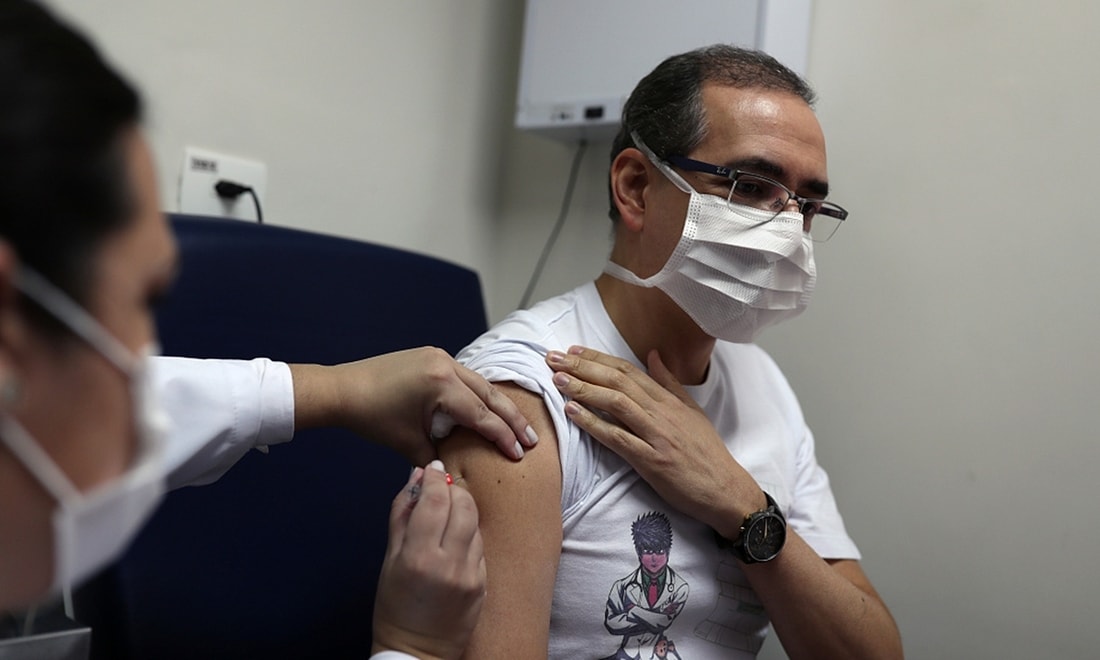
There will surely be high-profile court cases where COVID dissidents will go against politicians, and this is not to mention the new wave of the burning of 5G towers or anything else that people in foil hats will call the new culprit of the pandemic. But globally, even before COVID-19, when visiting some countries (mainly African and Latin American), travelers were strongly advised to get vaccinated against diseases specific to specific regions. Here, the plus or minus picture is the same, so we most likely will not see something fundamentally new.
It will take "many months and years"
The situation in the United States "will come to some semblance of normality" this fall, said immunologist Anthony Fauci, one of the country's most respected experts. At the moment, there are almost 21 million detected cases of coronavirus in the United States, of which approximately 360 thousand have been fatal. Trump's spring forecasts, according to which the country could lose 100 thousand people from COVID-19, then seemed like something unrealistic. Now it is clearly seen that the seemingly pessimistic forecasts would be a positive outcome.
So far in the United States, the distribution of the vaccine is not easy. By the end of 2020, authorities planned to vaccinate 20 million Americans. In fact, about 2.8 million people received the vaccine. The proliferation of regulatory-approved vaccines has been slow, and this is causing much outrage among Americans. Doctors at Stanford Medical Center even staged a protest: the first batches of vaccine were given to the wrong doctors who work directly with COVID-19 patients.
Also criticized the hit on the federal government Dean of the Faculty of Public Health at Brown University Ashish Jha: "They think their job is over with we bring the vaccine to the United States, and there is no clearly defined plan." According to the expert, a long chain of mistakes, which began in the spring, led to the current state of affairs. Ashish Jha believes that if the delivery of doses continues at the current pace, it will take "many months and years" to vaccinate the population. It faces hundreds of thousands of new deaths from COVID-19 in the United States alone.
Vaccines are demanding on temperature conditions, which also adds to the difficulties in their transportation and storage. For example, the Moderna vaccine should be stored at -20 degrees Celsius, and the vaccine developed by Pfizer and BioNTech should generally be stored at -70 to -80 Celsius. The AstraZeneca variant promises to be much more convenient. According to the corporation, a temperature of about 2-8 degrees Celsius is needed, that is, an ordinary refrigerator will do. However, this vaccine is not yet ready for use. Also, problems with the supply of consumables are not excluded: a lot of disposable syringes, cotton wool and gloves will be needed in excess of the current needs of medical institutions.
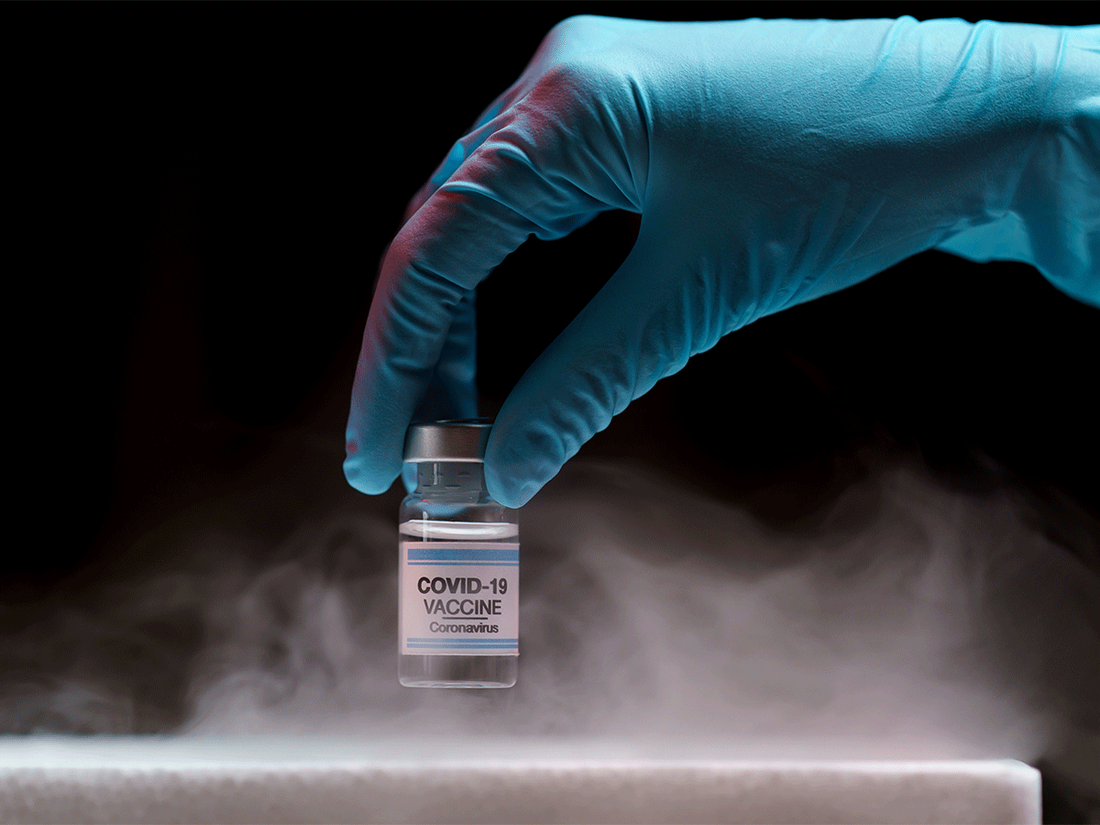
Finally, yet it remains a vague situation with new strains that periodically arise. Sumiya Swaminathan from WHO assures that at the moment there is no reason to doubt the effectiveness of vaccines against both the "original" coronavirus, that of the new varieties: they say, the reaction of the immune system to vaccinations is such that the body must be protected from different strains. And if a separate vaccine is needed, it will be easy to make.
In short, all this leads to the fact that with the advent of effective vaccines, the coronavirus will not disappear at a click and the world will not return to the “dock” format. Much of the new reality will remain for at least the coming months, and it is likely that it will remain until the end of the year. Wearing masks, using antiseptics, maintaining social distance - if you are just used to this, then you will not have to change your habits again, everything will remain as it is. Health professionals believe that basic measures against the spread of COVID-19 will be relevant throughout the year.


 Posts


